

Ice Dams Explained: What They Are and How to Prevent Them
February 24, 2026
This winter has brought heavy snowfall and long stretches of freezing temperatures across Clifton Park and the greater Capital Region area. Around this time of year, many homeowners are now noticing thick ice forming along the edges of their roof creating icicles. While it may look like a normal part of winter, that buildup can signal a larger issue.
Ice dams are common in Northeast winters, especially during years with significant snow followed by extreme cold. As February comes to a close, the risk often increases due to repeated freeze and thaw cycles. Understanding how ice dams form and what they can do to your roof helps you take action before small issues turn into costly damage.
What Is an Ice Dam and What Causes It?
An ice dam forms when heat from inside your home warms the roof deck and melts the snow sitting on top of it. That melted snow runs down toward the colder edge of the roof. When it reaches the eaves, it refreezes. Over time, this cycle creates a ridge of ice along the roof edge. As that ridge builds, it traps additional melting snow behind it. Water has nowhere to go so instead of draining off the roof, it can back up under the shingles and into your home.
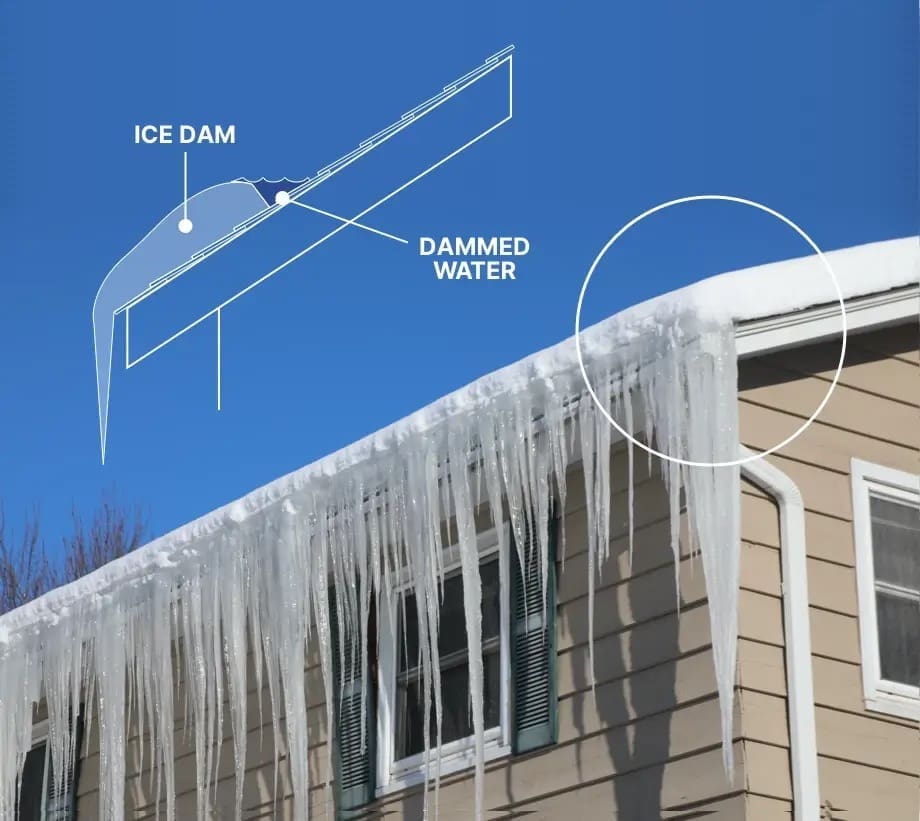
Several common factors contribute to ice dams:
- Poor attic insulation which allows heat to escape upward
- Inadequate attic ventilation which prevents cold air from circulating
- Air leaks from the living space through recessed lights or attic hatches
- Heavy snow accumulation followed by sunny or fluctuating temperatures
In winters like this one, with steady snowfall and long stretches of freezing temperatures, conditions are ideal for ice dams to form.
Signs You May Have an Ice Dam
Outside you may see:
- Thick ridges of ice along the roof edge
- Large icicles hanging from gutters
- Snow melting unevenly on the roof
- Sagging or damaged gutters from extreme weight of ice
Inside you may see:
- Water stains on ceilings or wall, especially near exterior walls
- Water leaking in the home, indicating an active leak
- Peeling paint
- Moldy, damp insulation in the attic
Icicles along do not always mean you have an ice dam. However, heavy, thick icicle buildup combined with interior moisture should not be ignored. Acting early can help limit damage.
Why Ice Dams Can Cause Serious Damage
Ice dams are not just about the ice you can see hanging from the roof. The real issue is what happens underneath. When ice builds up along the edge, it can trap moisture on the roof. That water has nowhere else to go, so it may start working its way under the shingles.
Over time, the trapped moisture can cause shingles to loosen or become dislodged. It can also leak into the attic and damage insulation, ceilings, and walls. The heavy weight of ice can sag gutters, tear them off the roof completely, and compromise structural beams. And long-term moisture build up can lead to mold and musty odors.
Not every ice dam leads to major problems, but ignoring them year after year can shorten the life of your roof and create the need for what could have been avoidable repairs.
How to Prevent Ice Dams
Prevention starts inside the home. Ice dams form because of uneven roof temperatures, so controlling heat loss is key.
First, check your attic insulation. Proper insulation slows the transfer of heat from your living space to the roof deck. Next, make sure your attic ventilation allows cold air to circulate. Good airflow helps maintain a consistent roof temperature.
You should also:
- Seal air leaks around attic hatches, plumbing vents, and light fixtures
- Keep gutters clear from leaves and debris so melting snow can drain properly
- Use a roof rake to carefully remove excess snow after heavy storms
- Schedule roof inspections if you notice recurring winter issues
Even small improvements can reduce the risk. Addressing insulation and ventilation early often prevents costly repairs later.
What to Do If You Already Have an Ice Dam
If you see ice building up along your roofline, the most important thing is to stay safe. Avoid climbing onto a snowy or icy roof. Slippery conditions can quickly become dangerous. You can reduce additional buildup by carefully removing snow from the roof edge with roof rake while standing on the ground. This helps limit the amount of melting snow feeding the ice dam.
Ice dams often form because of a mix of extreme cold, occasional warm days, and heat loss from inside the home. Snow melts underneath, refreezes at the edge, and water starts looking for a way out. Even a well installed roof can experience issues if water has nowhere to go.
At that point, the most important question becomes why it is happening. In some cases, the roof itself may be aging or damaged. In others, poor ventilation may be contributing to uneven roof temperatures. For example, if a roof does not have proper ventilation with a ridge vent, improving airflow can make a difference. On the other hand, if the issue stems from insulation inside the attic, that falls outside of roofing work and would need to be addressed separately.
If you are unsure whether the problem is roof related, it is a good call to have your roof inspected. At KC Entities Roofing and Siding, we can assess whether your roof is in good condition, whether ventilation improvements are needed, or whether it may be time to consider repairs or replacement.
Conclusion
Ice dams are common in Northeast winters, especially during seasons with heavy snowfall and long stretches of freezing temperatures like this one. The combination of cold weather, warm daytime sun, and heat loss from inside the home creates conditions for ice buildup along the roof edge.
Not every ice dam means you need a new roof. However, repeated issues can point to ventilation problems, aging shingles, and other roofing concerns. Understanding how ice dams form and what they can do helps homeowners stay proactive. If you are seeing signs of damage or questioning the condition of your roof, we are happy to take a look. We can help determine whether your roof is still in good shape or if repairs or replacement should be considered. Contact us today to schedule a roof inspection!
Comments
By providing a telephone number and submitting the form you are consenting to be contacted by text message or phone call (our message frequency may vary). See our privacy policy.

